
Medical Assistant and Phlebotomy Combination Program
Submitted By: Blanca Rochin
Partnership for Adult Academic and Career Education
Website: www.das.edu
Type of Practice: Equity
Program Area(s): CTE / Workforce Prep / Pre-apprenticeship
Region: Los Angeles Basin
Consortia Involved: Partnership for Adult Academic and Career Education
The Program of Practice
Adult learners seeking entry into healthcare careers often face barriers, including time constraints, financial limitations, and limited access to programs that provide both administrative and clinical training.
Traditional pathways often require students to enroll in multiple programs to earn the necessary certifications, resulting in extended timelines and increased financial burden. Additionally, many entry-level healthcare positions require a combination of front office, clinical, and phlebotomy skills; however, few programs offer these competencies in an integrated format. This gap necessitates a streamlined, affordable, and comprehensive training model that prepares students for multiple roles in a short timeframe while supporting rapid workforce entry.
The Response
The DAS Medical Assistant/Phlebotomy program is intentionally designed as a stackable, accelerated pathway that equips students with both administrative and clinical competencies.
Key program components include:
● A structured 27-week program combining medical assisting and phlebotomy training
● 700 total hours, including a 160-hour externship in a clinical setting
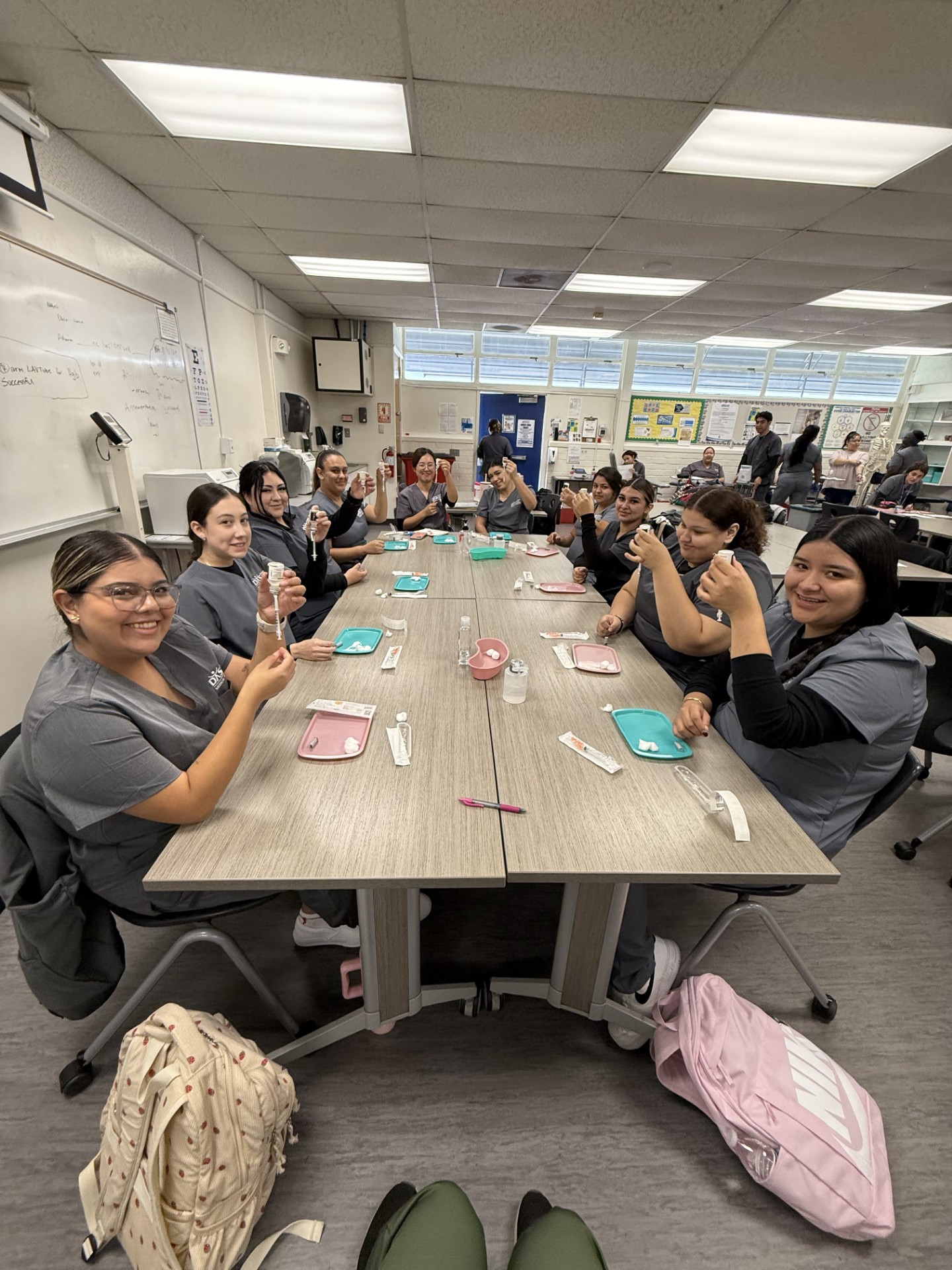
● Hands-on instruction in vital signs, injections, venipuncture, EKGs, and laboratory procedures
● Administrative training in medical billing, coding (ICD-10/CPT), scheduling, and electronic health records (EHR)
● Preparation for national certification through NCCT, NHA, or CCMA pathways
● Skills verification through competency-based assessments and clinical check-offs
● A required 20-hour Career Preparation component focused on resume development, interview skills, workplace communication, and job search strategies
Students complete required clinical competencies, including 50 successful venipunctures and 10 capillary punctures, ensuring readiness for certification and employment.
The program integrates classroom instruction with real-world application, ensuring students are both technically prepared and workforce-ready upon completion.
The program also includes a structured Career Preparation module (20 hours) designed to support a successful transition into employment. This component provides targeted instruction in resume development, interview preparation, soft skills, professionalism, and job search strategies, ensuring students are equipped to secure and retain employment in healthcare settings.
The Unique Features of the Program
The DAS Medical Assistant/Phlebotomy program distinguishes itself through its integrated, dual-certification model and workforce-focused design.
Key innovative features include:
● Stackable credential pathway combining medical assisting and phlebotomy in one program
● Accelerated timeline, allowing students to complete training in under seven months
● Comprehensive skill development across both clinical and administrative healthcare functions
● Hands-on, competency-based instruction with real clinical skill verification
● Embedded externship experience providing direct exposure to healthcare environments
● Integrated Career Preparation component, strengthening workforce transition and employability
This model increases graduates' marketability by preparing them for multiple roles in healthcare settings while reducing time and cost barriers.
The Outcome
The DAS Medical Assistant/Phlebotomy program demonstrates strong outcomes aligned with workforce entry and student success:
● High program completion rates across cohorts
● Strong certification attainment in medical assisting and phlebotomy
● Successful transition of graduates into entry-level healthcare positions
● Completion of a structured career preparation module supporting job placement and workforce readiness
Development of job-ready technical and professional skills aligned with employer expectations
Graduates are prepared for employment in clinics, medical offices, laboratories, and outpatient care settings. Many students utilize this program as a foundational step into healthcare, with some advancing into nursing and other allied health pathways.
The program serves as a critical entry point into the healthcare workforce, expanding access and opportunity for adult learners.